
What Will I Do Today?
The question that is benign, inevitable, and utterly fundamental to the success of the entire organisation

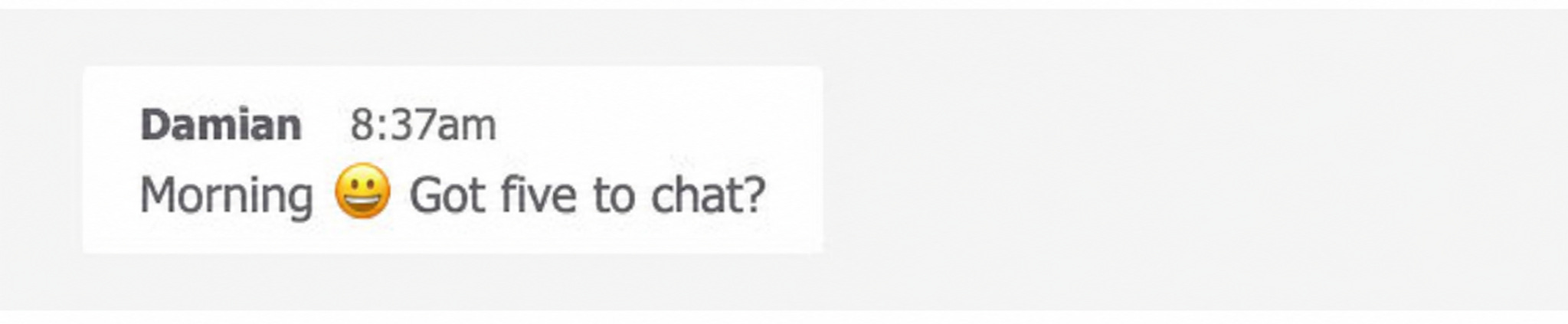
It’s 8:37am. After two sips of coffee, you have just regained a sense of tangible presence in the world.
Ok, there’s the laptop. Here we go.
You unlock the screen and are slapped by a calendar of back-to-backs and an unresolved double booking. There are 17 unread Slack alerts, which is remarkable given there were zero before your head hit the pillow. Your inbox has developed its own bloom of new messages, and your status going auto-green has alerted your digital-stalker colleague, Damian.
At this moment, you will ask yourself two questions, consciously or otherwise.
The first is a rhetorical resignation to fate: Dammit… how long until the weekend?
The second is benign, inevitable, and utterly fundamental to the success of the entire organisation: What will I do today?
From the perspective of the organisation, the ideal answer is simple: I will spend my day on work that makes progress towards the most important outcomes for the organisation. But that is an answer that almost nobody can give - just 16% of people believe their work is entirely aligned with organisation goals1.
What a disaster. That’s 84% of people looking at their work each day and thinking, Ehh it’s not exactly the most important stuff.
We wouldn’t accept 84% of doctors feeling they aren’t doing what is most important to help a patient. We wouldn’t accept 84% of pilots feeling they aren’t doing what is most important to land a plane safely.
So why do we accept that for people in knowledge work?
What the hell does ‘high net worth synergistic growth’ mean anyway? 🫠
The first reason - the most important work is not in a format that enables it to be picked as a task for the day.
I mean, we all know the organisation has a strategy. We’ve seen the vision, the neat pillars on a page, the targets. But none of it arrives in the form you need at 8:37am: a clear chunk of work that you can get your head around and compare with all the other work competing for your time. At 8:37am, the strategy is most often present in the abstract - as language, and often esoteric jargon at that - but not as a practical choice. The work that is a clear chunk - booked meetings, processing emails, commenting on that report, reluctantly responding to Damian - will win, and the strategy will lose.
Don’t touch, not yours! 🙅♀️
The second reason is more confronting - even when you can see the most important work, you might not be able to do anything about it, and even worse, you might be better off doing something else.
You can see the fix that customers need. You can see the analysis that might spark a change in tactics. You can see how to respond to a competitor that made an unexpected move. But your job description says don’t touch. And the annual plan says we have no unallocated money. And what will get you promoted says do this more visible thing instead. Sometimes the most important work is visible enough to tease, but you cannot do anything about it. That’s torture - I’d rather work in blissful ignorance, thank you, than know 90% of my unnecessarily specific job has no meaningful impact for the next ten months while the product portfolio is rebuilt and I can’t help because that would be a secondment, and there is a headcount cap, and the budget is locked, and…2
We go with the flow 🌊
So, we all make the sensible choice.
We do the work the calendar dictates. We answer the messages from the boss, then Damian, then the rest. We prepare for the meeting someone else scheduled about the… wait, what is this meeting about? We finish the task from yesterday because it can be done and that’s a dopamine hit. We prioritise the work that is safe, requested, visible, explainable, inevitable and inside the boundaries of our unnecessarily specific roles.
We will end the day exhausted, with enough boxes ticked to feel productive, and able to justify every hour. And still, in the background, there is the uneasy feeling that a lot of the most important work was left untouched.
The grand illusion of strategy 🐰🎩✨
This is how strategy dissipates between the executive table and the every day. Not through contrarianism, laziness, or incompetence, but through thousands of sensible individual answers to the question, What will I do today?
People answer the question from inside the information, constraints and incentives the organisation has built around them. Sometimes the strategy is too vague to guide the answer. Sometimes the important work is clear, but the person does not have the permission, protection, capacity or social licence to pursue it. Either way, the result is the same: the daily work of the organisation drifts away from the work the organisation most needs.
The usual response to this problem is to communicate the strategy better. More clearly. More often. In more channels. Leaders build strategy-on-a-page documents, provide quarterly updates, host town halls, populate intranet pages, and spawn talking point guides.
These are not useless. We all must understand where the organisation wants to go and why. But understanding the strategy is not the same as having the strategy shape the work of the day.
A person can understand the strategy and still be unable to see the most important work at 8:37am. A person can see the most important work and still be constrained from doing it. Between the strategy and the day sits the system of work: job titles & descriptions, promotion incentives, annual plans, manager assurance burden, and the simple human desire to get through the day without significant frustration and other flavours of pain. It is this system of work that warps the choice of work to do, and no communication exercise can overpower that.
So let’s do better 💪
Imagine, for a moment, that all the work an organisation could do next is captured on a series of cards. Each card represents a possible chunk of work: a customer interview, a process fix, a pricing experiment, a product release, a coaching chat, deep thinking about a problem, preparing a report. All of these cards are spread across a table. Each day, each person stands at that table and draws a hand of cards. That hand is their answer to, What will I do today?
For most people, their hand of cards is a poor match with the most important work right now and where their specific skills and experience might have the greatest impact. If it were poker, the average hand is a two of clubs, four of spades, an Uno blue seven, and a crumpled piece of paper with ‘eleven of cats’ scrawled across it.
The problem is that in most organisations, the table of cards is disastrously distorted. Some of the most important cards are not on the table at all, because no one has done the work of translating abstracted or organisation-spanning strategic outcomes into specific chunks of work. Some cards are on the table because they will achieve a target that was set in the annual plan but is not that important anymore. Some are there because a powerful stakeholder keeps adding them. Some are there because they are easy to measure, easy to explain or easy to complete. Damian has added a card that is not important, but taking it might at least make him stop hassling you. Meanwhile, a high-definition job description prevents you from even looking at most of the cards, let alone picking them up.
We need all the cards on the table 🃏
This is why the answer to What will I do today requires a granular view of work, and this is where many organisations stop far too early in translation of their strategy. The convention is for leaders to communicate desired outcomes and then expect individual leaders, teams or functions to separately translate those outcomes into work. But when 81% of executives say work increasingly crosses functional boundaries and 63% say it does not fit neatly inside core job descriptions3, this is like telling an orchestra you want a concerto and then asking each instrument section to write its own music in isolation. The result may contain sensible component parts, but it is unlikely to become a coherent whole, if at all a semblance of what you asked for.
The hard work and inconvenient truth is that translation of strategy into work to do is something essential and perpetual. Broad outcomes must be translated into the work to do next. Not themes, not pillars. Work. Pieces of work specific enough that people can look at them, understand them, compare them, debate them, allocate them, start them, stop them and complete them. This translation cannot be treated as an opaque task pushed down to individuals through the hierarchy. It must be a collaborative act. This is the missing discipline: put the work on the table. Figuratively, and I would argue, literally.
The Work Table 🃏🃏🃏
Start with building and maintaining a current view of the outcomes you most want in the future - this is your strategy. A single, living source of truth of your desired future state that you don’t build and launch once a year; you maintain perpetually as reality evolves, and you can take a snapshot of its current state at any time of the year.
Now the most important step begins. Translate those outcomes into potential work4, but only for a short period of time - I would argue two weeks is often about right. Now you have all potential work ‘on the table’. Everything your strategy asks the organisation to do next - in understandable and allocatable chunks of work - is visible.
You are now in a position to make a call on what work will be done and not done and to connect the best people to that work. Not through a broad exhortation to leaders to ‘align with the strategy’. We are being specific - these are the cards we are picking up, and these are the cards we are leaving on the table.
This practice has a massive impact on the individual answer to What will I do today, because it changes the information environment in which the answer is formed. In the usual opacity of the organisation, we can indulge many forces: we can choose the easy thing, the visible thing, the politically safe thing, the personally interesting thing, the thing that keeps the boss happy, or the thing that stays neatly inside our role. we don’t indulge these forces nefariously, it is how we survive the conventional system of work we have inherited. But when all the potential work is visible, when its relationship to strategy is explicit, when capacity is finite, and when people are looking at one another asking “what are we actually going to do?”, those forces become harder to hide behind. What is most important to the organisation has an exponentially higher chance of winning than it did before.
Seeing all the work changes so much more 🚀
This is not command and control. It is, in many real ways, the opposite. Command and control attempts to remove judgement from the edges of the organisation. In contrast, putting the work on the table improves the quality of judgement at the edges by making the relevant information more complete and more shared. It creates social accountability without requiring surveillance. It allows people to see not only their own work, but the wider field of possible work. It makes trade-offs explicit. It gives people permission to stop doing work that sounds useful in isolation but does not matter enough in context. It also gives leaders a more honest view of capacity. All organisations have far more potential work than available effort, and yet we behave as though declaring another priority somehow creates the capacity to pursue it. A visible table of work makes that fantasy harder to sustain.
The table also changes the conversation about talent. If the work that matters most sits outside the structure of existing jobs, then the organisation has a choice. It can preserve the dignity of the high-definition job and fail to pursue the work, or it can move skills toward outcomes. This does not require a reckless abolition of jobs, managers or teams. It does require a willingness to see people as more than job-holders. The question becomes not “whose job is this?” but “what work matters, what skills does it require, who has those skills, and what will they not do so they can contribute?” In my experience creating a strong Work Table practice with dozens of organisations, the specific work each person does almost certainly changes, and for some, that change can be near total.
Activity is not strategy 🎯
In dry terms, this is alignment of execution to strategy5. But that phrase undersells it. What matters is not that people can trace their work back to a strategic pillar in a planning document. What matters is that people have a clear, shared and current view of the work that matters most, and that their individual effort is part of it. Each person has a visible hand of cards. Each hand makes sense in relation to the others. Each card has a thread back to an outcome that matters now. And because the work has been chosen from a fuller set of possibilities, the organisation has also made a real trade-off. It has not merely added priorities. It has decided.
This is why the daily question must be answered collectively before it can be answered individually. A person can only give a strategically useful answer to What will I do today if the organisation has done the work above them and around them. It must maintain a current view of the outcomes that matter most. It must translate those outcomes into potential work. It must make that work visible. It must compare the work to real capacity and real skills. It must draw a line between work that will be done and work that will not be done. And it must create enough shared clarity that individuals can then act with autonomy inside the boundaries of a collective choice.
When organisations do not do this, execution drifts. Drift is what happens when thousands of individually rational answers fail to add up to a collectively strategic one. Each person may be busy, diligent and well-intentioned. Each team may be able to justify its work. Each department may be able to point to an outcome that sounds valuable. But if those outcomes do not sit in a coherent hierarchy back to what matters most right now, and if the work has not been compared across the organisation’s finite capacity, then the organisation is not executing strategy. It is accumulating activity.
This, I think, is the meaningful future of work: the design of systems that help people answer the daily question well in a world where the most important work changes markedly and perpetually. We need systems of work that can, at great pace, make the work to do ultra-clear and align available effort immediately.
Ask yourself, ask your people 🤔
The test is simple. Ask someone at the end of the day: Do you feel the things you did today were amongst the most important things you could have done to advance the organisation’s strategy? Then ask whether others would agree, whether the work was chosen from a visible set of alternatives, whether it was matched to their skills, and whether something less important was deliberately not done to make room for it.
Strategy is not present because we can repeat it. Strategy is present when it changes what we do. It is present when it helps us choose one piece of work over another. It is present when it gives permission not to do something. It is present when it challenges job boundaries, exposes weak priorities, reallocates capacity and creates social accountability around trade-offs.
Strategy is present when the organisation can look across its people on any given day and say: the answers to What will I do today add up to the work that matters most right now.
And if the strategy is not present in that answer, it is not really present at all.
So, what will you do today?
https://www.axioshq.com/research/state-of-internal-communications-report
Totally not a real example, I’m totally over it anyway, I don’t know why you’re asking about it
https://www.deloitte.com/us/en/insights/topics/talent/skills-based-organizational-strategy.html
There are many ways to do this; my recommendation is to appoint a single individual as ‘Producer’ of an outcome; an individual who can keep close to context and do the important work of thinking about what will be most impactful next
Peter Drucker, Alfred Chandler, Robert Kaplan, and David Norton are just a few of the many proponents